


How Gay is Gay Romance?
I was introduced to a boy band called One Direction in 2014 and I very naturally fell down the rabbit hole of shipping Larry Stylinson (a fan created pairing between the members - Harry Styles and Louis Tomlinson). It was a canon event, no one could’ve stopped it! This product of the fangirls’ delusion, opened up a door of literature for me which contained such narrative profundity, such evocative themes, such visceral resonance — yes, I am talking about Wattpad. It was my first encounter with any type of LGBTQIA+ themed content. At present, Larry Stylinson may have receded with the band’s indefinite hiatus, but Wattpad’s gay love stories never took a break.
But it is worth analyzing how gay these gay love stories actually are. Although these fictional pairings or ‘shipping’ as it is known online, might seem like a modern manifestation of the internet's crazy fandom culture, it really isn’t. In 1974, the fans of Star Trek wondered what could’ve happened between the characters Captain Kirk and Dr. Spock, and with this a whole new genre of literature emerged— a whole new world of gay romance: written by women, to be read by women and discussed by women.
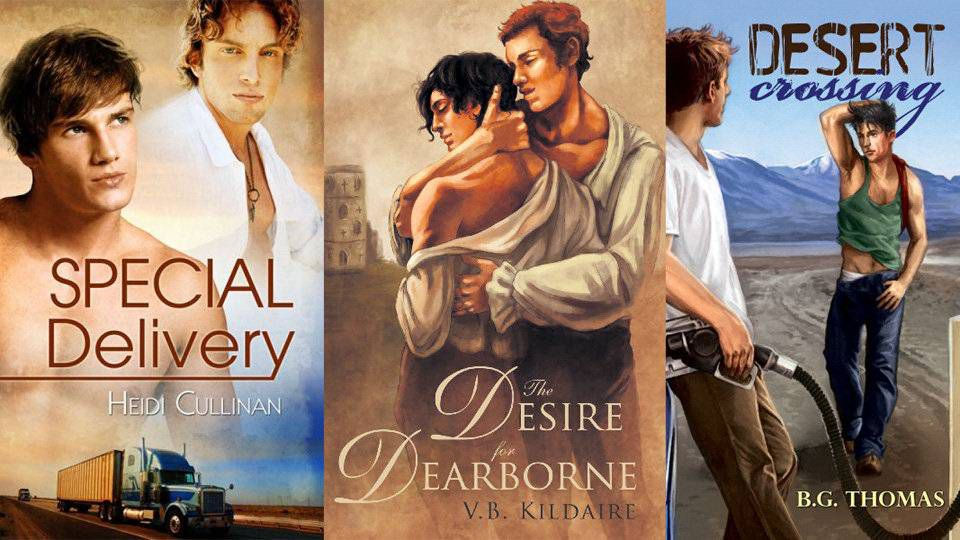
In contemporary times, there has been a boom of gay content in the market. Among fan-fiction, YA romance writers and questionable websites, gay romance books are displayed on the racks of major bookstores. They are being adapted into movies and shows and there are endless gay comics online. However, when you flip the books, look at the credits, you find that the writers are women… with husbands… and kids! Something you definitely won’t expect when you look at the ultra-gay cover art!
Why are these women writing gay romance? Well, it’s actually not as unidimensional as it may seem. Drawing insights from Kacey Whalen’s master’s thesis — A consumption of Gay Men, the reasons could be outlined as follows:
● Political Activism
● Promoting acceptance for non-heterosexual relationships.
● Exposure and representation for gay boys and men.
● By excluding female heroines, women writers gain more creative freedom to shape storylines that break away from usual portrayals of women in romantic tales.
● Gay men can be both strong and vulnerable unlike straight men, at the same time, they don’t have to conform to the conventional gender roles.
● Writing gay romance allows women writers to explore other sides of their sexuality that might not be allowed in other aspects of their lives. It becomes a safe place for sexual fantasies that women readers can imaginatively participate in.
● Writing gay romance allows women to create more equal relationships between two men. In straight romances, a man usually holds the power in the relationship, and the woman is rendered weak in comparison. Women cannot be equal for physical reasons and cultural traditions. Two men can be equal and avoid potential sexism and abusive relationships that concern a largely female audience.
● Sapphic authors might find it safer to express their own queerness by writing about queer men. When a queer woman writes about queer men, she’s exploring a type of queerness that’s separate from her own gender. This can provide space for those who are questioning or not openly out to explore queerness without directly involving their own identity. A woman who writes about relationships between men might face less assumption of her own queerness compared to if she wrote about relationships between women.
Not to mention, there exists gay fiction written by gay men, but they rarely have romance in them. They usually revolve around the themes of coming out, disownment, dysmorphia, politics, and more, things that play a bigger part in the life of a gay/queer person. This has become even more of a reason for women to write gay romance, as according to them, they want to ‘liberate the gays’ by giving them a attractive boyfriend, apolitical environment and a happy ending. Heidi Cullian, author of gay romance, tells The Globe and Mail — “One of the reasons why more women are ravenous for these books is that they want to read something about gay men that doesn’t involve them suffering from [HIV/AIDS] committing suicide or getting bullied. I know I was. I was really tired of dead gay men in films and books or campy guys who never had sex, so I wanted to fix the problem and show that gay men were having great sex and had complicated, interesting relationships that people would love to know about.” Speaking of great sex, these books have a lot of smut in them, and when I say a lot, trust me you aren’t ready for it. One of the tropes that these books follow is the ‘OmegaVerse’ or also known as the Alpha/Beta/Omega (A/B/O) fiction. This trope is common in supernatural fictions, wherein the men are born into one of the aforementioned designations. The Alphas are the dominant ones, Betas are subordinate to the Alphas and the Omegas are submissive to them, they are sometimes even enslaved by them. Omegas can also get pregnant through anal sex with an Alpha. The A/B/O stories are all about Alphas dominating and (literally) raping Omegas. The sex is largely non consensual, rough and extremely aggressive. In an interview with IN Magazine, Lucy Lennox, author of gay romance, mentions — “Rough straight sex can seem rape-y unless it’s framed as BDSM, which is a subgenre that operates in another corner of the literary marketplace. But two rival studs of equally fit physiques wrestling over something can be, for many readers, extraordinarily horny. Having a man and a woman “face off” against each other physically seems weird, rightly or wrongly, while sports are huge in MM (gay) romance. Enemies to lovers is a delicious trope. The tension is way different when it’s between men,” This takes us back to Kacey’s thesis, and one of the reasons which mentions women exploring their own sexuality by writing about gay men — translating to — them using gay men as a medium to explore their kinks and even rape fantasies without endangering their own physical and emotional well-being. They can arouse themselves through bondage and humiliation fetishes with the aid of gay men.
Such problematic portrayal of gay men by women writers also affected gay men writing gay fiction. Not only has this hinged a very heterosexual image of a gayness in the minds of the audience, but also women have become the gatekeepers of this genre. When a gay man wants to tell his story, in his terms, he is rejected on grounds of being unprofitable. “Gay men, in fact, often find it frustrating to write in this genre. They sometimes pour their hearts into a manuscript, writing about gay characters dealing with the difficulties gay men face every day, only to have it rejected by publishers of MM (gay) Romance because there isn’t enough romance in it.” Jamie Fessenden, a gay author, mentions in his blog. Another gay author, `Nathan Burgoine, reveals in his blog how his audience demographic, of queer and straight, comprehend and affect his work. It is a very beautiful piece, I recommend reading it . In it, he says, “Both those types of readers directly affect what gets considered “good” (for any iteration of “good,” including “well-written,” or “romantic” or whatever you’d like) thanks to ratings and rankings and algorithms and categorizations, and that’s where I’m heading with this. “Whoever writes the best story” is of course subjective, and driven by a majority consensus. So, when the non-queer readers reach out to tell me they don’t particularly like even the small slices of my real queer life I include in my romances, I know that’s playing into the majority consensus of how my writing is received as a greater whole. The people who’ve reached out to me saying those facets of my romances are a bummer outnumber the queer readers who’ve let me know they feel differently (especially the queer men, specifically). If queer men writing from their lived, breathed experiences aren’t “good” because a majority of readers don’t want their reading experiences to include even those tiniest of microaggressions, what does that do?
Today, female gay romance authors often state, even if they’re cisgendered, they identify as queer which somehow imparts authenticity to their work. This takes us to the hashtag, ‘OwnVoices’ coined by the writer Corinne Duyvis in 2015 to promote books by marginalized writers. However, it evolved into a stick to beat authors into coming out. As was the case with Becky Albertalli, writer of Simon Vs The Homosapien Agenda (later adapted into the film Love, Simon), who was accused of using queer narratives for profiting while being a straight woman. She came out as Bisexual in 2020, following the backlash. Sigh — I told you this wasn’t unidimensional. It becomes apparent why the issue keeps coming back to haunt the writers and readers alike. Undoubtedly women are the pioneers of gay fiction, and it would be wrong to generalise that all women writing gay romance are terrible. But it is also undeniable that the highly idealised narratives they write about gay men, about hot, abled, privileged gay men, are not reflecting the reality and giving them a fictional happy ending does nothing for the gay men enduring their lives hiding, fighting and surviving. Taking away women’s right to write books on any topic they like is unreasonable. Instead we should let the queer community use the pen first. (And also maybe lay some kind of censorship to make sure no community is violated). I’d like to end this by quoting Colleen Hoover, the internet’s most loved author (for writing wholesome romance books) and the most hated author (for writing toxic romance books)! “I would love, love, love to write a mlm (gay) novel. I haven’t yet, simply because there are so many authors already writing authentic, diverse and lgbtq+ books that have been overlooked in the industry for years. This industry has always celebrated the straight white author, and being a straight white author, I see the problems in my taking up space where other authors are still being overlooked”. I mean, if Colleen, who can’t differentiate between love and toxicity, can still understand this, I don’t think there’s any reason for others not to.

Comments